Custom Nylon Machining: Nylon Blocks, Gears, and Mechanical Transmission Solutions

Why Nylon is the Ultimate Engineering Plastic
When it comes to engineering plastics, nylon is a real powerhouse. It's versatile, tough, and resistant to chemicals, making it perfect for a wide range of industrial and mechanical uses. From gears and blocks to transmission parts, nylon can do it all. One of the standout features of nylon is its unique combination of strength, flexibility, and resistance to wear, which makes it ideal for high-performance applications where other plastics or metals might fall short. Its adaptability means that nylon can be used across various industries, including automotive, aerospace, manufacturing, and consumer goods.

🎉🎉🎉Limited Time Offer Use code: QR4GNY08SHVR at checkout and enjoy a special discount on your entire order! 👉 Nylon plastic
Nylon's chemical resistance adds another layer of reliability, especially in environments where components are exposed to oils, solvents, or other harsh substances. This is why nylon is often the material of choice for parts that need to maintain their integrity under challenging conditions. Its low coefficient of friction also means that nylon components are great for reducing wear and tear, which translates to longer-lasting parts and reduced maintenance costs.
In this article, I'm going to walk you through why custom nylon machining is so effective, focusing on nylon blocks and how they can be used in gears and mechanical transmission systems. We'll also explore the advantages of different types of nylon, such as Nylon 6 and Cast Nylon, and how they can be precisely machined to meet specific industrial needs. By the time you're done reading, you'll have a solid grasp of nylon blocks, the machining processes involved, and their key applications in industry. Plus, you'll see how custom nylon solutions can make a big difference in achieving optimal performance and efficiency for your projects.
Overview of Nylon Blocks
Material Characteristics: Nylon blocks are all about strength, durability, and stability. Their high tensile strength and excellent wear resistance make them ideal for parts that need to handle stress and tough conditions without breaking down. Nylon is also known for its excellent dimensional stability, meaning it retains its shape and strength even when subjected to fluctuating temperatures and pressures, which is critical for maintaining reliability in industrial applications.
Different Types of Nylon:
-
Nylon 6: Nylon 6 is popular for a reason—it’s got the right mix of strength, toughness, and machinability. It works great for mechanical parts like gears and bushings, especially when you need something resilient that can handle shock. Nylon 6 is also well-suited for applications where consistent performance and adaptability are required, making it a go-to choice for many engineers.
-
Cast Nylon: Cast nylon takes things up a notch in terms of toughness, which makes it perfect for applications that require extra durability. Plus, it’s easy to machine into large, custom parts with consistent properties throughout. Cast Nylon is particularly effective for larger components that need enhanced strength and uniformity, offering advantages in both production efficiency and part performance.
Custom Nylon Machining Process
Introduction to Custom Machining: Custom machining is all about getting exactly what you need, down to the last detail. Whether it’s complex shapes or tight tolerances, custom machining ensures that nylon components are tailored to fit specific requirements. The ability to produce parts that meet exact specifications is crucial for ensuring that components work seamlessly within larger mechanical systems, reducing the risk of failure and improving overall reliability.
CNC Machined Nylon Components: CNC machining is the backbone of precision manufacturing for nylon components, like gears and blocks. CNC machines allow us to hit incredibly accurate dimensions every time, ensuring that each part performs exactly as intended. CNC technology also offers flexibility—whether it's prototyping a new design or scaling up for mass production, CNC machining is capable of delivering high-quality results regardless of the project scope.
Benefits of Custom Nylon Machining: The benefits of custom nylon machining go beyond just precision. It’s cost-effective, quick, and adaptable—perfect for meeting unique design specs. The machinability of nylon also means less production time, so you get your custom parts faster. Moreover, the ability to customize every aspect of the part—from dimensions to surface finish—means you can optimize the component for specific operating conditions, which enhances both performance and longevity.

Nylon Gears Manufacturing
Importance of Nylon Gears: Nylon gears are a game-changer for mechanical transmission. They’re lightweight, they cut down on friction, and they’re great for reducing noise—something metal gears can’t always promise. Plus, nylon gears don’t need lubrication, which makes them an even more attractive option in a lot of systems. The inherent shock absorption properties of nylon also help protect other components in the system from sudden impacts, extending the overall lifespan of the machinery.
Custom Machining for Nylon Gears: Custom CNC machining allows us to create gears that are precisely tailored to fit your system’s needs. Whether you need a unique gear shape or a specific dimension, CNC technology can make it happen, ensuring a seamless fit every time. The flexibility offered by CNC machining means that even complex gear geometries can be produced with high accuracy, which is essential for ensuring smooth and efficient operation in mechanical systems.
Case Study: For example, one of our clients needed a solution to reduce noise in an industrial conveyor system. A custom nylon gear did the trick—reducing noise and increasing the system’s longevity, thanks to its self-lubricating properties and lightweight construction. This solution not only improved the working environment by reducing noise pollution but also cut down on maintenance needs, as the nylon gears required significantly less upkeep compared to their metal counterparts.
Mechanical Transmission Parts Using Nylon Blocks
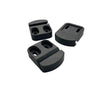
Applications of Nylon Blocks in Mechanical Transmission: Nylon blocks play a key role in mechanical transmission systems. They’re often used as bushings, spacers, and supports—basically, anything that needs to be strong, wear-resistant, and low friction. Nylon handles these tasks really well, even in demanding environments. Its ability to dampen vibrations also makes it ideal for reducing wear and tear on surrounding components, which is crucial for keeping machines running smoothly over long periods.
Advantages of Nylon for Mechanical Transmission: Nylon’s durability, excellent wear resistance, and self-lubricating properties make it a top choice for mechanical transmission parts. These features help extend the life of the components and reduce the need for constant maintenance. Additionally, nylon’s resistance to moisture and chemicals ensures that it remains stable and reliable, even in harsh environments where other materials might degrade or fail.

Comparing Nylon 6 and Cast Nylon in Machining
Nylon 6 vs. Cast Nylon: Nylon 6 and Cast Nylon both have their unique advantages, depending on the application. Nylon 6 is great when you need something tough that can absorb impact, making it perfect for dynamic uses. Cast Nylon, on the other hand, is easier to machine and offers more consistent properties, which is ideal for larger components. Cast Nylon’s ability to produce large, void-free parts makes it particularly useful in heavy-duty applications where uniformity and strength are paramount.
Recommendations for Different Applications: If you need impact resistance and flexibility, Nylon 6 is the way to go. But if you’re making larger, custom components that need to be uniform throughout, Cast Nylon is your best bet. Knowing these differences helps you choose the right material for your project. For example, Nylon 6 might be the preferred choice for moving parts that need to handle dynamic loads, while Cast Nylon could be the best option for structural components that require dimensional stability and high load-bearing capacity.
Custom Solutions for Mechanical and Industrial Needs
Customization Capabilities: At BeePlastic, we’re all about providing custom nylon solutions that meet the unique needs of each client. We offer CNC machining for nylon blocks and components, ensuring that every product meets the highest standards for quality and performance. Our team works closely with clients to understand their specific requirements, ensuring that the final product not only meets but exceeds expectations.
Examples of Custom Components: Some of the most common nylon components we machine include gears, bushings, rollers, and structural supports. These parts are used in a variety of industries, from automotive to manufacturing, which shows just how versatile and effective nylon really is. We’ve seen firsthand how custom nylon components can solve unique challenges—whether it’s reducing weight in automotive applications or increasing wear resistance in high-friction environments.
Why Custom Nylon Machining Matters
Custom nylon machining is essential for producing high-quality, reliable mechanical transmission parts. Nylon blocks, gears, and other components can be customized to ensure optimal performance in even the most demanding environments. The ability to precisely tailor each component means you can achieve greater efficiency, lower maintenance costs, and longer equipment life.
If you need custom nylon machining solutions, BeePlastic is here to help. Our team is dedicated to delivering the highest quality products, tailored specifically to your needs. Get in touch with us today to learn more about how we can meet your specific industrial requirements and take your projects to the next level.
🎉🎉🎉Limited Time Offer Use code: QR4GNY08SHVR at checkout and enjoy a special discount on your entire order! 👉 Nylon plastic

FAQs Section
-
What are the advantages of nylon over metal for gears? Nylon gears are lightweight, reduce noise, and don’t require lubrication, making them an excellent alternative to metal gears in many applications. Additionally, nylon’s ability to absorb shock can help prevent damage to other components in the system.
-
How precise can CNC machining be for nylon components? CNC machining can achieve high precision, with tolerances as low as 0.01 mm, ensuring that nylon components fit perfectly in their intended applications. This level of precision is especially important in systems that require tight fits and exact alignment for optimal performance.
-
What types of nylon are best suited for mechanical parts? Nylon 6 and Cast Nylon are both well-suited for mechanical parts, with Nylon 6 providing impact resistance and Cast Nylon offering superior machinability. Choosing between them depends on the specific demands of your application, such as the need for flexibility, load-bearing capacity, or dimensional stability.
-
Posted in
Cast Nylon, CNC nylon machining, Custom Nylon Parts, Industrial Solutions, mechanical transmission, Nylon 6, nylon blocks, nylon engineering, nylon gears, nylon machining