Bakelite Sheet: What It Is, How It’s Made, and Why It’s Useful
Learn what Bakelite sheet is, how phenolic laminates are made, and which grade and drawing details matter when buying material or requesting custom parts.
Have you ever heard of bakelite? If you work in electrical engineering, manufacturing, or industrial applications, you probably have. Bakelite is the world's first synthetic plastic, invented over a century ago by Leo Baekeland in 1907. Today, bakelite sheet remains an essential material for electrical insulation, mechanical components, and high-temperature applications across multiple industries.
Bakelite sheet is a flat, rigid phenolic laminate that can be precisely cut, drilled, CNC machined, or turned into various custom shapes and sizes to meet specific engineering requirements. Whether you need electrical insulators for switchgear panels, heat-resistant mechanical parts, or durable structural components, understanding bakelite sheet properties and applications is crucial for making informed material selection decisions.
In this comprehensive guide, we will explore what bakelite sheet is, how it's manufactured through advanced lamination processes, why its unique combination of electrical insulation and thermal resistance makes it invaluable for demanding applications, and how our precision CNC machining services can transform bakelite sheets into custom-engineered components for your specific project needs.
Need Bakelite Material or a Machined Part?
Choose a listed sheet, rod or component, or send your drawing for cutting, drilling and CNC machining. Listed material prices and custom machining quotes cover different requirements.
For a useful machining quote: provide STEP/STP or PDF drawings, quantity, material grade if known, critical dimensions and tolerances, application conditions, delivery destination and target date.
You can email drawings to beeplastic@beeplastic.com. If the grade is undecided, describe the electrical, temperature, moisture or mechanical requirements. Grade availability, achievable tolerances, documentation and lead time need project review.
Read the guide below for material background, or view our phenolic machining service.

What Bakelite Sheet Is: Composition and Types
Bakelite is a thermosetting plastic made from phenol formaldehyde resin, one of the earliest and most reliable synthetic polymers developed for industrial use. Unlike thermoplastics that can be melted and reshaped, phenol formaldehyde resin is a thermosetting polymer that undergoes an irreversible chemical transformation when cured by heat and pressure, resulting in a hard, rigid, and dimensionally stable material that maintains its properties even under elevated temperatures.
This revolutionary discovery by Leo Baekeland in 1907 sparked the polymer age and fundamentally changed the chemical industry, paving the way for modern plastic manufacturing. Bakelite sheet represents one of the most versatile product forms of this groundbreaking material, offering engineers and manufacturers a reliable solution for applications requiring exceptional electrical insulation, heat resistance, and mechanical strength.
Types of Bakelite Sheet by Reinforcement Material
Bakelite sheet is available in various types and grades, each engineered with specific reinforcement materials to optimize performance for different industrial applications. Available thicknesses and dimensions depend on the product and grade. Check the listed dimensions and confirm availability before ordering.
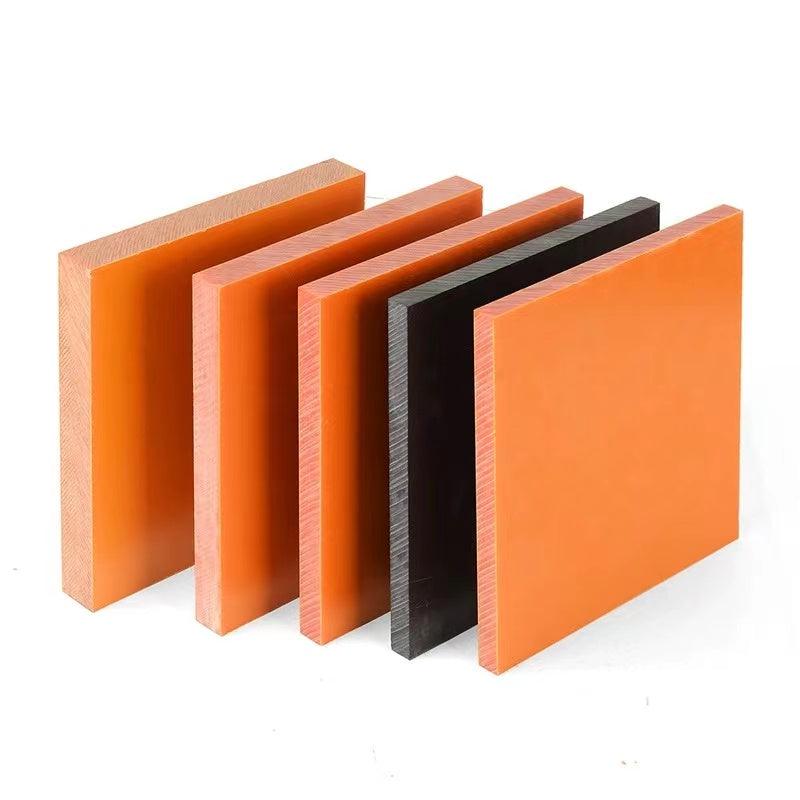
- Paper-Reinforced Phenolic Sheet: Layers of paper impregnated with phenolic resin form a rigid laminate used for selected electrical-insulation parts. Grades such as XX and XXX have different properties; the name "Bakelite" or sheet color does not establish a NEMA grade. Check the grade, thickness, electrical requirements and applicable data before choosing a bakelite sheet.
- Fabric-Reinforced Phenolic Sheet: Cotton canvas or linen reinforcement is combined with phenolic resin. These grades may be considered for gears, bushings, wear components, jigs and fixtures, subject to load, moisture, wear and drawing requirements. Specify reinforcement and grade; performance is not identical across all fabric-based sheets.
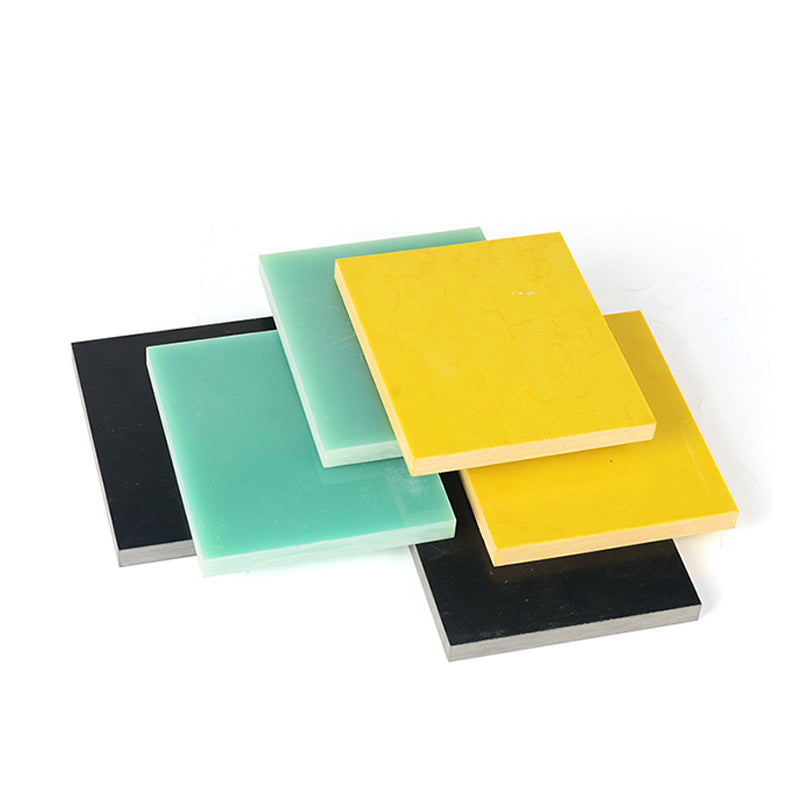
- Glass Phenolic and Glass Epoxy Are Different Materials: Glass-reinforced phenolic grades exist, but G-10 and FR-4 use glass cloth with an epoxy resin binder. They are not phenolic-resin Bakelite grades. Do not substitute paper or fabric phenolic for G-10/FR-4, or the reverse, without checking drawing and application requirements. Temperature, electrical and fire-performance requirements depend on the exact grade.
Need Custom-Machined Bakelite Components?
Send your drawing for Bakelite cutting, drilling or CNC machining. Identify the material grade, quantity, critical dimensions and fits so we can review feasibility and prepare a project-specific quote.
- Email STEP/STP or PDF drawings with your quantity and delivery destination
- We review the material, geometry, critical tolerances and missing information
- Confirm the quoted scope, price, lead time and available documentation
- Agree the drawing revision, specifications and order terms before production is scheduled
How Bakelite Sheet Is Made: The Manufacturing Process
The manufacturing of bakelite sheet involves two sophisticated processes that require precise control of temperature, pressure, and chemical composition to ensure consistent quality and performance characteristics.
Step 1: Bakelite Resin Production
The first stage involves producing the phenol formaldehyde resin itself through a carefully controlled condensation polymerization reaction. Phenol (C₆H₅OH) and formaldehyde (CH₂O) are organic compounds that react together in a reactor vessel under controlled heat (typically 100-150°C) and pressure conditions in the presence of either acid or base catalysts.
During this exothermic reaction, the phenol and formaldehyde molecules form cross-linked polymer chains, creating a complex three-dimensional molecular network known as phenol formaldehyde resin. The reaction produces an initial liquid or semi-solid resin called a resol (when using base catalysts) or novolac (when using acid catalysts), which can still be processed before final curing.
The resin properties can be precisely modified and optimized by adding various fillers (such as wood flour, mineral fillers, or carbon black), curing catalysts (hexamethylenetetramine for novolacs), colorants (typically orange or black pigments), and other performance-enhancing additives to achieve specific mechanical, electrical, and thermal characteristics required for different applications.
Step 2: Lamination and Sheet Formation
The second manufacturing stage transforms the liquid phenolic resin into solid bakelite sheet through a high-pressure lamination process. Base materials—either paper sheets, fabric layers (cotton canvas or linen), or woven glass cloth—are first impregnated or saturated with the liquid bakelite resin using dip tanks or coating machines. The impregnated layers are then partially dried to remove excess solvents and achieve the proper resin content.
Multiple layers of the resin-saturated material are carefully stacked together in precise alignment to achieve the desired final thickness. This assembly is placed between highly polished steel caul plates in a large hydraulic press capable of generating pressures between 1,000 to 2,000 PSI (7 to 14 MPa).
The hydraulic press simultaneously applies intense heat (typically 140-180°C) and pressure to the layered assembly for a controlled cure cycle lasting 30 minutes to several hours, depending on thickness. During this curing process, the thermosetting resin undergoes complete polymerization and cross-linking, transforming from a pliable prepreg into a fully cured, rigid, and dimensionally stable bakelite sheet.
After curing and cooling, the finished sheets can be cut to size using industrial saws, precisely machined using CNC milling operations, drilled to create mounting holes and features, or turned on lathes to produce cylindrical components like bushings and insulators.
Why CNC Machining Is Optimal for Bakelite
CNC (Computer Numerical Control) machining represents the most efficient and precise method for fabricating custom bakelite components from sheet stock. This advanced manufacturing process uses computer-controlled multi-axis machines (mills, lathes, routers, and drilling centers) to cut, drill, mill, bore, and turn phenolic materials into highly precise and geometrically complex parts with repeatable accuracy.
CNC machining of bakelite sheet offers significant advantages over alternative manufacturing methods such as compression molding, transfer molding, or 3D printing:
- Drawing-Based Precision: Feasible tolerances and inspection requirements depend on the grade, geometry and machining setup; confirm critical features in the quote.
- Rapid Turnaround: Eliminates expensive tooling development time, enabling fast production from prototype to production volumes
- Project Cost: Machining can avoid dedicated mold tooling, but cost depends on material, geometry, quantity and inspection requirements.
- Design Flexibility: Easy design iterations and modifications without retooling costs; handles complex 3D geometries efficiently
- Grade-Specific Machining: Paper, fabric and glass-reinforced laminates require grade-specific cutting, tooling and handling decisions.

Why Bakelite Sheet Is Useful: Key Properties and Performance Characteristics
Bakelite sheet continues to be specified by engineers and procurement specialists worldwide because it offers a unique combination of properties and performance characteristics that make it ideally suited for demanding electrical, mechanical, and thermal applications. Understanding these material properties enables optimal material selection for specific application requirements.
Critical Performance Properties
- Mechanical Properties: Strength varies with reinforcement, laminate direction, thickness and test conditions. Use grade-specific data and consider load direction, notches, impact and safety factors; the material name does not guarantee a part will withstand a given load.
- Moisture and Dimensional Stability: Moisture absorption varies by resin, reinforcement, thickness and test conditions. Paper and cotton-fabric phenolic laminates can absorb moisture, affecting dimensions and electrical performance. Check the selected grade data for humid or wet service.
- Electrical Insulation: Electrical-grade phenolic laminates can be used for insulating supports and barriers. Dielectric strength, arc/tracking performance and moisture-conditioned properties vary by grade and test method. Select material and geometry for the specified voltage and environment; material choice alone does not guarantee protection against arcing or fire.
- Chemical Compatibility: Compatibility depends on the exact grade, chemical concentration, temperature and exposure time. Some phenolic grades are unsuitable for strong alkalis or aggressive chemicals. Verify compatibility for the actual service fluid.
- Temperature and Fire Performance: Phenolic laminates are thermosets and do not melt for reshaping, but excessive heat can damage or degrade them. Continuous and short-term temperature limits depend on grade, load and conditions. Confirm temperature data and the required flame rating; do not assume all phenolic sheets are self-extinguishing.
- Machining Considerations: Phenolic laminates can be cut, drilled and CNC machined. Tool wear, edge chipping, surface finish and achievable tolerances depend on reinforcement, geometry, tooling and setup; review requirements for the selected grade.

Common Industrial Applications and Use Cases
The exceptional combination of electrical, mechanical, thermal, and chemical properties enables bakelite sheet to serve critical functions across diverse industries and applications:
- Electrical Insulation Components: Selected grades may be used for terminal boards, switchboard panels, supports and insulating components. Confirm voltage, clearances, environment and required electrical or fire-performance tests; suitability depends on the complete design.
- Electronics Components: Selected grades may be used for insulating panels, supports and electronic equipment components. Do not assume electromagnetic shielding, waterproofing or impact protection from the material name alone.
- Mechanical Components and Wear Parts: Fabric-based phenolic grades may be considered for gears, bushings, bearings, washers and fixtures. Check load, speed, wear, mating surfaces, moisture and lubrication requirements.
- Decorative and Structural Laminates: Industrial phenolic sheets, decorative laminates and laboratory-grade panels can have different constructions and specifications. Confirm the specified product and grade for work surfaces or building applications rather than treating every Bakelite sheet as interchangeable.
- Thermal Barriers and Fixtures: Some grades can be considered where thermal isolation is needed. Confirm service temperature, exposure duration, load and fire-performance requirements; Suitability for oven components or heat shields must be established for the specific grade and design.
- Jigs, Fixtures, and Manufacturing Tooling: Bakelite's dimensional stability, machinability, and electrical insulation properties make it valuable for custom manufacturing fixtures, assembly jigs, testing platforms, and tooling components used in production environments.
Limitations and Considerations
While bakelite sheet offers numerous advantages, engineers should also consider certain material limitations when evaluating it for specific applications:
- Brittleness: Bakelite is more brittle compared to modern engineering thermoplastics and can fracture under sharp impact or shock loading
- Limited Color Range: Available colors depend on the product and grade. Orange, brown or black color alone does not identify reinforcement, grade, electrical properties or filler composition.
- Moderate Impact Resistance: Not suitable for applications requiring high impact or shock resistance; consider fabric or glass-reinforced grades for improved impact performance
- Chemical Limitations: Can be attacked by strong oxidizing acids (concentrated nitric acid, concentrated sulfuric acid) and some strong alkalis at elevated temperatures
However, these limitations can often be overcome by selecting the appropriate bakelite grade (paper vs. fabric vs. glass reinforced), adjusting design parameters to avoid stress concentrations, combining bakelite with protective coatings or encapsulation, or using bakelite in hybrid designs with complementary materials.

Recommended Bakelite Sheet Products for Your Project

Orange Bakelite Sheet (30-100mm)
Premium paper-based phenolic laminate in natural orange color. Excellent for electrical insulation, terminal blocks, and switchboard panels. Available in thicknesses from 30mm to 100mm with custom cutting services.
- ✓ High dielectric strength
- ✓ Confirm grade and service temperature
- ✓ Confirm moisture requirements
- ✓ Standard & custom sizes
Canvas Phenolic Fabric Sheet (2-50mm)
High-strength fabric-reinforced phenolic laminate. Superior mechanical properties for gears, bearings, bushings, and wear-resistant components. Available in 2mm to 50mm thickness range.
- ✓ High impact resistance
- ✓ Excellent wear properties
- ✓ Low friction coefficient
- ✓ CNC machining ready
Looking for other bakelite sheet sizes or grades? Browse our complete Bakelite & Phenolic Laminate Collection for currently listed sizes, thicknesses and reinforcement types.
Professional Bakelite Machining and Cutting Services
At BeePlastic, we understand that standard bakelite sheets often require custom fabrication to meet your specific application requirements. Our comprehensive plastic fabrication services transform raw bakelite sheet material into precision-engineered components tailored to your exact specifications.
Our Bakelite Processing Capabilities Include:
- Precision CNC Machining: Milling and turning requirements are reviewed from your drawing. Material grade, geometry, critical tolerances and inspection needs determine the machining approach and quoted scope.
- Custom Cutting to Size: Precision cutting of bakelite sheets to your exact dimensional requirements using advanced CNC routers and industrial saws. Perfect for plates, panels, and flat components.
- Drilling and Tapping: Accurate hole drilling, countersinking, counterboring, and thread tapping operations for mounting holes, fastener locations, and assembly features.
- Edge Finishing: Deburring, edge rounding, chamfering, and surface finishing to achieve specified edge conditions and surface quality requirements.
- Material Selection Consulting: Our experienced engineers provide expert guidance on selecting the optimal bakelite grade (paper, fabric, or glass reinforced) based on your specific electrical, mechanical, thermal, and chemical requirements.
Why Choose BeePlastic for Bakelite Fabrication?
- Material Identification: State the required reinforcement and grade, or describe the application so the choice can be reviewed.
- Quantity-Based Quoting: Include prototype and production quantities for a quote covering your requested scope.
- Confirmed Lead Time: Availability, quantity, geometry and inspection affect scheduling; use the lead time confirmed for your order.
- Inspection Requirements: Specify critical dimensions, fits and required records. Confirm available documentation with the quote.
- Defined Quote Scope: Confirm material, machining, inspection, packing and shipping requirements when reviewing price.
- Delivery Planning: Provide the destination and target date so shipping options and costs can be checked.
- Drawing Review: Identify the application, unclear features and critical requirements for manufacturability review.
Get Your Custom Bakelite Components Quote
Send your drawing, quantity and material requirements for a machining quote. If the grade is undecided, describe the application conditions so it can be reviewed.
Conclusion: Bakelite Sheet for Reliable Industrial Performance
Bakelite sheet represents a time-tested, reliable solution for applications demanding exceptional electrical insulation, thermal stability, mechanical strength, and chemical resistance. As the world's first synthetic plastic invented over a century ago, bakelite has proven its value across generations of industrial applications and continues to be specified by engineers worldwide for critical components.
Whether you need paper-reinforced bakelite sheets for electrical insulation in switchgear and control panels, fabric-reinforced grades for mechanical components like gears and bearings, or glass-reinforced laminates for high-temperature and chemically demanding environments, understanding the material properties, manufacturing processes, and application considerations enables optimal material selection.
Bakelite sheet is manufactured through a sophisticated lamination process involving phenol formaldehyde resin and reinforcement materials (paper, fabric, or glass cloth), resulting in a rigid thermosetting plastic with unique properties. The material excels in applications where high dielectric strength, low moisture absorption, heat resistance, dimensional stability, and excellent machinability are essential requirements.
At BeePlastic, we're committed to helping you leverage the proven performance of bakelite sheet in your applications. With experience in plastic materials and precision CNC machining, we provide not just high-quality bakelite sheets in various grades and sizes, but also comprehensive custom fabrication services to transform raw materials into finished components that meet your exact specifications.
Ready to get started with bakelite sheet for your project? Whether you need standard sheet materials, custom-cut pieces, or precision-machined components, our team is here to help with expert material selection guidance, competitive pricing, and fast turnaround times.
Questions About Bakelite Sheet?
Our experienced engineering team is ready to assist you with technical support, material selection guidance, and project consultation. We're here to help you find the perfect bakelite solution for your application.
At BeePlastic, we're not just a supplier - we're your manufacturing partner dedicated to delivering precision, quality, and reliability in every component. From single prototypes to production runs, we provide exceptional service and attention to detail.
Related Topics: Bakelite sheet, phenolic laminate, phenolic resin sheet, electrical insulation materials, paper bakelite, fabric bakelite, glass epoxy laminate, heat resistant plastic sheet, CNC machining bakelite, custom bakelite components, electrical grade phenolic, mechanical grade phenolic, bakelite properties, phenolic sheet applications, industrial laminates, thermosetting plastics, precision plastic machining
-
Posted in
bakelite, Bakelite properties, bakelite sheet, bakelite sheets, CNC Bakelite machining, custom Bakelite parts, electrical insulation materials, engineering, heat resistant plastic, heat resistant plastics, high temperature plastics, Industrial Laminates, insulating board, materials, phenolic sheet, plastic sheet, thermosetting plastic