Why Is PEEK So Expensive? A Buyer's Cost Guide
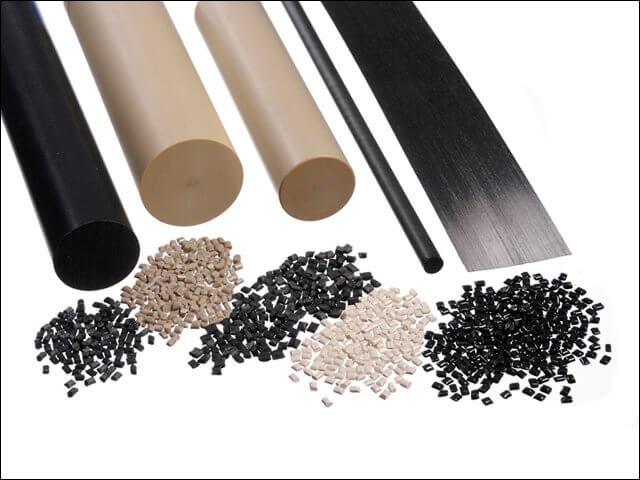
PEEK is expensive because three things are all genuinely hard at once: synthesizing the polymer, sourcing it from a small set of producers, and processing or machining it without ruining the part. None of those is marketing. They are real constraints baked into the material.
But the price tag is not the question that matters most. The question is whether your specific part actually needs PEEK. Engineers reach for it on reputation, then get a quote that stops the project. Sometimes PEEK is the only material that survives the job. Sometimes a lower-cost high-temperature polymer meets every line on the spec for a fraction of the cost.
This page explains what drives PEEK's price, how the grades differ, what machining it well actually takes, and how to decide when it is worth it. Engineer to engineer — no hype, no pressure to overspend.

What Is PEEK?
PEEK — polyetheretherketone — is a semi-crystalline thermoplastic in the PAEK (polyaryletherketone) family. It sits at the top of the engineering-plastics pyramid, and it earns that spot on properties, not branding.
Four things define it. First, a high continuous service temperature: PEEK holds its mechanical performance at temperatures that melt or soften most other thermoplastics, with a continuous use rating around 250°C. Second, a high glass transition temperature (Tg) of 143°C, which is where the material starts to lose stiffness — well above where commodity plastics give up. Third, excellent chemical resistance: PEEK shrugs off most solvents, acids, and hydrocarbons, which is why it shows up in oil & gas and semiconductor wet environments. Fourth, strong mechanical properties — high strength, stiffness, and fatigue resistance that hold up under load.
It is also inherently flame retardant and low-smoke, with no additives required. That matters in aerospace and electrical applications where flammability is a hard limit.
If you need a part that survives heat, chemicals, and mechanical stress simultaneously, PEEK is one of the few materials that delivers all three. The cost follows from that capability.
Why Is PEEK So Expensive?
PEEK's price is not a markup. It traces back to chemistry, market structure, and fabrication — three independent reasons that stack on top of each other.
High-Temperature Synthesis
PEEK is built by step-polymerization. The reaction combines bisphenolate salts with a difluorobenzophenone monomer in a high-boiling polar aprotic solvent — typically diphenyl sulfone — at around 300°C. That temperature is not incidental. The growing polymer chains stay in solution only at extreme heat, and the reaction has to be held in a narrow window to control molecular weight and avoid defects.
This is a hard process to run. It needs specialized high-temperature reactors, tight process control, and solvent recovery systems most chemical plants do not have. The monomers themselves are not commodity feedstocks. Every step adds cost, and there is little room to cut corners without degrading the resin. The difficulty of making PEEK at all is the first reason it costs what it does.
Limited Supply, Growing Demand
PEEK is a young polymer. It was first produced in the late 1970s, which makes it decades younger than commodity engineering plastics. Only a small number of producers worldwide make it at scale. Global PEEK capacity is measured in the tens of thousands of tonnes per year, against millions of tonnes for commodity engineering plastics like nylon and polycarbonate. That gap is structural, not a rounding error.

Meanwhile demand keeps climbing. Aerospace, medical, semiconductor, and oil & gas all keep finding new uses for PEEK, and the qualification cycles in those industries lock in long-term consumption. Limited supply against rising, sticky demand holds the price up. This is basic market structure, not a temporary shortage that will resolve next quarter.
Hard to Process and Machine
PEEK's properties cut both ways. The same thermal stability that makes it useful makes it difficult to form. Its melting point sits at 343°C and its glass transition at 143°C, so molding and extrusion demand high-temperature equipment and precise control — ordinary thermoplastic tooling will not reach it.
Machining is its own challenge. PEEK is abrasive and tough. It wears tooling faster than commodity plastics, and it holds internal stresses that can move dimensions or crack a part if the work is done carelessly. Cutting PEEK to tight tolerances takes the right tooling, the right feeds and speeds, and real experience — a point that becomes critical in the machining section below.
PEEK Price Per Kg — What to Expect
There is no single PEEK price per kg, and anyone who gives you one flat number is hiding the variables that actually move the cost. Three drivers decide what you pay.
Grade. This is the biggest lever. Virgin (unfilled) PEEK is the baseline. Glass-filled and carbon-filled grades cost more, because the filler and the compounding step add cost. Bearing and wear grades sit higher still. Medical and implant grades sit far above everything else — qualification and traceability, not just the resin, drive that tier.
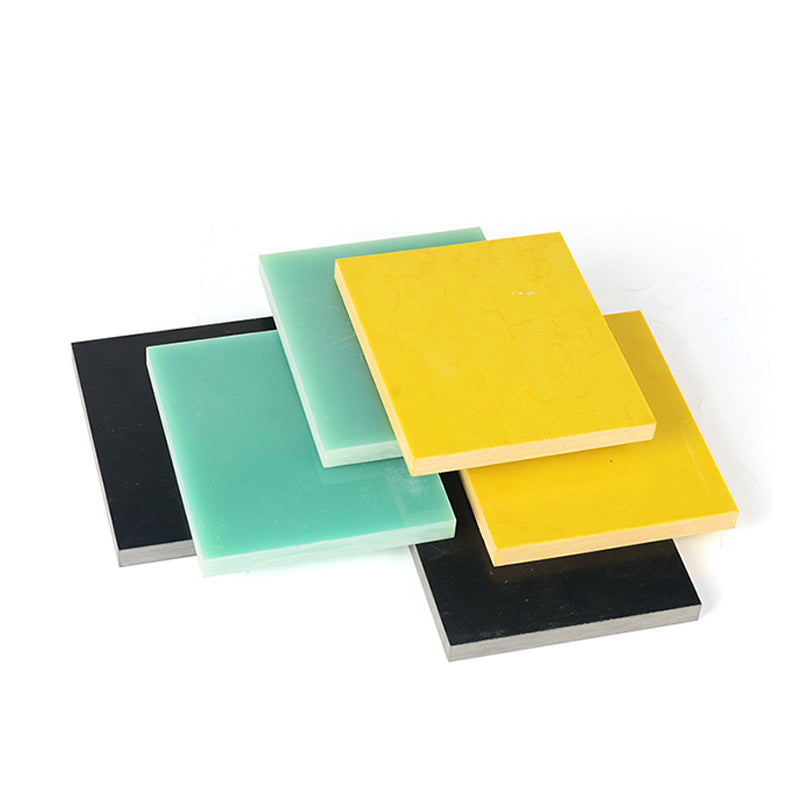
Form. The same resin costs differently as rod, plate, sheet, or film. Extruded rod, compression-molded plate, and thin film each carry different processing costs, and stock availability in your exact size matters.
Quantity. PEEK follows a quantity curve. Small one-off cuts carry a higher per-kg cost than larger orders, though for an expensive material the absolute spend on small lots is often still manageable. We hold no minimum order quantity, so a single prototype part is not a problem.
The number that matters is the cost of your part, not the cost of a kilogram. Material grade, the form you start from, how much you machine away, and order size all feed into it. Send us your part for a quote and you get a real figure instead of a range.
When PEEK Is Worth It — A Decision Framework
PEEK is worth it when the job genuinely demands everything PEEK offers at once: high temperature, chemical resistance, and mechanical strength together, in a part where failure is expensive. It is not worth it when you are paying for properties the application never uses.
The most common mistake is specifying PEEK on reputation. Against commodity plastics the gap looks dramatic — PEEK often costs more than 20 times what polyurethane, nylon, or polycarbonate cost per kg. That contrast is real, but it is also the wrong comparison. Those materials were never going to survive the service conditions PEEK is chosen for.
The comparison that matters is against the other high-performance polymers a buyer actually weighs. PEI/Ultem and PPS both handle real heat at lower cost. If your part runs hot but not at PEEK's ceiling, and chemical exposure is moderate, one of them may meet every requirement. PTFE wins on chemical resistance and low friction but cannot carry structural load. PAI/Torlon beats PEEK on mechanical performance at temperature, at a higher price.
| Material | Continuous service temp | Relative cost | Typical reason to pick |
|---|---|---|---|
| PEEK | ~250°C | Highest | Heat + chemical + mechanical, all at once |
| PEI / Ultem | ~170°C | Lower | Heat and stiffness on a tighter budget |
| PPS | ~220°C | Lower | Strong chemical resistance, lower cost |
| PTFE | ~260°C | Varies | Chemical resistance, low friction; not structural |
| PAI / Torlon | ~260°C | Very high | Extreme mechanical strength at temperature |
PPS is the substitution we see most often, and it is frequently the right call. We cover that trade-off in detail in our PEEK vs PPS comparison. If PEEK is the answer after that honest look, you will know exactly why — and that is when the cost is justified.
PEEK Grades and How to Choose
PEEK is not one material. Picking the wrong grade is one of the most common ways buyers overspend — paying for carbon fiber when virgin PEEK would have done the job, or specifying a structural grade for an electrical insulator that needs the opposite property.
Start with what the part actually does. If it needs electrical insulation, you want virgin (unfilled) PEEK — not carbon-filled or carbon/graphite bearing grades, which all conduct. If it carries load at temperature, a glass- or carbon-filled grade earns its higher cost through stiffness and dimensional stability. If it slides against another surface, a bearing grade is built for it.

| Grade | What it is | Best for | Relative cost |
|---|---|---|---|
| Virgin / unfilled | Pure PEEK; best toughness, elongation, and electrical insulation | Semiconductor insulators, seals, wafer-contact parts | Baseline |
| Glass-filled (GF30) | ~30% glass fiber; higher stiffness, dimensional stability, lower creep at temperature; not for electrical insulation | Higher-load fixtures, structural parts | Higher |
| Carbon-filled (CF30) | ~30% carbon fiber; highest stiffness and strength, better thermal conductivity, low wear, electrically conductive | High-load structural and low-wear parts | Higher still |
| Bearing / wear grade | PEEK blended with PTFE, graphite, and/or carbon; low friction, high wear resistance | Bushings, bearings, wear pads | Premium |
Over-specifying is a real cost mistake. A filled grade costs more, and on an already expensive material that adds up fast. If you are not sure which grade fits, tell us the operating conditions — temperature, load, chemical exposure, electrical requirement — and we will point you to the right one. You can also browse our PEEK stock and grades to see what is available in rod, plate, sheet, and film.
Machining PEEK — Stress, Cracking & Tolerances
PEEK holds tight tolerances, but only if you respect how it behaves. The failures we see come from treating it like aluminum.

The biggest risk is internal stress. PEEK stock carries residual stress from how it was extruded or molded, and machining releases it. On a tight-tolerance part or a thin wall, that release shows up as cracking or dimensional drift after the part comes off the machine. The fix is stress relief: annealing the material, often between roughing and finishing passes, lets the stress settle before the final dimensions are cut. Skip this step on a precision part and it can move out of spec days later.
PEEK is also abrasive. It wears tooling faster than commodity plastics, and filled grades wear it far faster — glass and carbon fiber are hard on cutting edges. Those grades need carbide or PCD (polycrystalline diamond) tooling to hold an edge and a finish.
Coolant is its own trap. PEEK does not shed heat like metal, and heavy flood coolant can shock-cool the cut and seed micro-cracking. Controlled air or a light mist is often the better choice, keeping the cut stable without thermal shock.
With the right tooling, the right feeds and speeds, and proper stress management, PEEK is predictable. We work to ±0.03mm, and a free DFM review catches stress and tolerance risk before any material is cut — which on a costly material is exactly where you want the problem caught. See our CNC machining services for how we handle precision PEEK parts.
Buying Genuine PEEK — Sourcing and Traceability
Not all "PEEK" is PEEK. Recycled or refilled material is sometimes sold as virgin, and the cheapest stock on the market is often regrind — reprocessed scrap that will not perform like the datasheet says. On a material chosen for reliability, that is a real risk.
The protection is traceability. Genuine virgin PEEK from a known source performs to its datasheet; unverified regrind does not. Knowing your stock is genuine, traceable virgin material is part of why real PEEK costs what it does, and it is what stands between you and a part that fails qualification. A material certificate of analysis (COA) is available on request.
We hold PEEK in rod, plate, sheet, and film, with no minimum order quantity — a single prototype part is not a problem. If you only need stock cut to your dimensions, our cut-to-size service handles that directly. To see grades and forms in stock, browse our PEEK inventory.
Common PEEK Applications
The parts we machine most in PEEK come from semiconductor and electronics work: insulators, test and handling fixtures, and wafer-contact parts where dimensional stability and cleanliness matter. We also machine a lot of high-temperature electrical insulation, and seals, washers, and bushings where the material has to hold up under heat and load at the same time. These are the custom jigs and fixtures precision shops rely on.

PEEK is also widely used in aerospace, where its strength-to-weight ratio and flame resistance pay off — see our PEEK in aerospace article. It is used in medical and implantable devices across the industry as well, covered in our article on PEEK medical implants. We machine PEEK to customer specifications and do not supply implant-grade certified material or make biocompatibility claims.
Frequently Asked Questions
Why is PEEK so expensive?
Three reasons stack up: a difficult high-temperature synthesis that needs specialized equipment, a small number of producers keeping global supply tight, and a high melting point that makes the material hard to process and machine.
How much does PEEK cost per kg?
There is no single number. Price depends on grade, the form you start from, and quantity. The figure that matters is the cost of your specific part, which comes from a quote — not a per-kg list price.
Is PEEK worth the cost?
It is worth it when your part genuinely needs high temperature, chemical resistance, and mechanical strength all at once. If only one or two of those matter, PPS or PEI/Ultem may meet the spec for far less.
Why is PEEK filament so expensive?
The same cost drivers apply — hard synthesis, limited supply, costly raw resin. On top of that, printing PEEK demands a high-temperature printer, tight thermal control, and tolerates significant waste from failed prints.
What is the difference between virgin, glass-filled, and carbon-filled PEEK?
Virgin is pure PEEK with the best toughness and electrical insulation. Glass-filled adds stiffness and stability; carbon-filled adds the most strength and is conductive. See the grade table, and avoid over-specifying.
Can PEEK be machined to tight tolerances without cracking?
Yes. The key is stress relief — annealing the material, often between roughing and finishing — plus the right tooling and coolant strategy. We work to ±0.03mm on precision PEEK parts.
Is there a minimum order quantity for PEEK?
No. We hold no minimum order quantity, so a single prototype part is fine. For an expensive material, not being forced into a large lot matters.
What temperature can PEEK handle?
PEEK has a continuous service temperature around 250°C, a glass transition temperature of 143°C, and a melting point of 343°C. It holds mechanical performance where most thermoplastics fail.
PEEK vs PEI/Ultem or PPS — which should I choose?
It depends on how hot the part runs and what chemical and mechanical demands it faces. PPS and PEI/Ultem handle real heat at lower cost. For the full trade-off, see our PEEK vs PPS comparison.
Get a Quote on Your PEEK Part
Tell us what the part has to do, and we will help you get the grade, the tolerance, and the cost right. Upload your CAD files or send a drawing for a 24-hour quote and a free DFM review.
Buy PEEK Stock
PEEK rod, plate, sheet, and film. No minimum order quantity. Genuine, traceable virgin material. Global shipping.
Browse PEEK stockCustom PEEK Machining
Send CAD files or a drawing for a 24-hour quote and free DFM review. ±0.03mm tolerances, no minimum order quantity, in-house material expertise.
Request a quote
-
Posted in
advanced polymers, chemical-resistant plastic, engineering plastic, engineering plastics, heat-resistant plastic, high performance plastics, high-performance plastic, industrial plastic, PEEK applications, PEEK cost, PEEK material, PEEK plastic, PEEK price, PEEK vs other plastics, specialty plastics, why PEEK is expensive